
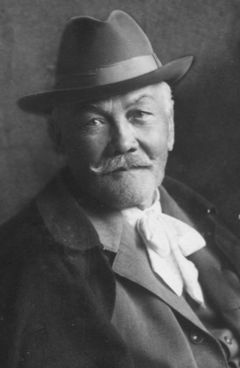
Life story
Pavol Országh, who chose the poetic name Hviezdoslav, was born on 2 February 1849 in Vyšný Kubín in the Orava region. He came from a family of the lesser gentry, studied in Miškovec and Kežmarok, and alongside the law, which he practised as an attorney, he never abandoned poetry.
He became the greatest Slovak poet of his time. In collections and vast compositions such as Hájnikova žena and Ežo Vlkolinský he gave the Slovak language an expressive power it had never known before. His verse was rich, precise, and deeply bound to the Orava landscape and its people.
He translated Shakespeare, Goethe, Pushkin, and Petőfi, opening windows onto the world for Slovak literature. In Krvavé sonety, written during the First World War, he raised his voice against bloodshed — they rank among the most powerful anti-war poems in the Slavic literatures.
After the founding of Czechoslovakia he became a deputy and a member of the academy, yet he continued to live modestly in Dolný Kubín, where he died on 8 November 1921. His name is borne by the Orava library and theatre; his work remains a cornerstone of Slovak poetry.
Biographical information from public sources. Portrait: Wikimedia Commons (Public domain).
Constellation of Life
Important milestones that shaped their journey.