
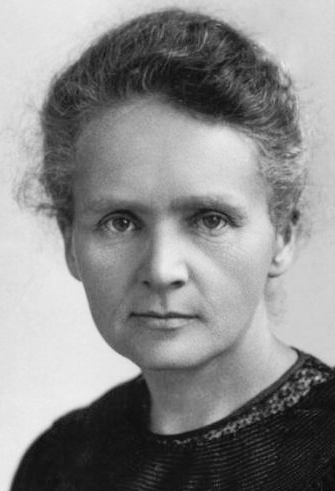
Life story
Born Maria Salomea Skłodowska on 7 November 1867, she came into the world with a curiosity that would carry her far beyond the place of her birth. Of Polish origin, she would in time become a naturalised French citizen, belonging in the end to two nations and, through her work, to all of humanity.
As a physicist and chemist, she devoted her life to the study of radioactivity, a field she helped to define. Alongside her husband, Pierre Curie, she pursued the phenomena first observed by Henri Becquerel, sharing with them the 1903 Nobel Prize in Physics for their joint research.
Her labours did not end there. In 1911 she was honoured once more, receiving the Nobel Prize in Chemistry for the discovery of the elements radium and polonium and for the patient isolation of radium and the study of its remarkable nature. She remains a figure of quiet, resolute dedication to knowledge.
She died on 4 July 1934 at Sancellemoz. Her contributions endure in every corner of modern science, and she rests among the honoured of France in the Panthéon in Paris, remembered for a life given wholly to understanding the world.
Životopisné údaje z verejných zdrojov. Portrét: Wikimedia Commons (Public domain).
Constellation of Life
Important milestones that shaped their journey.