
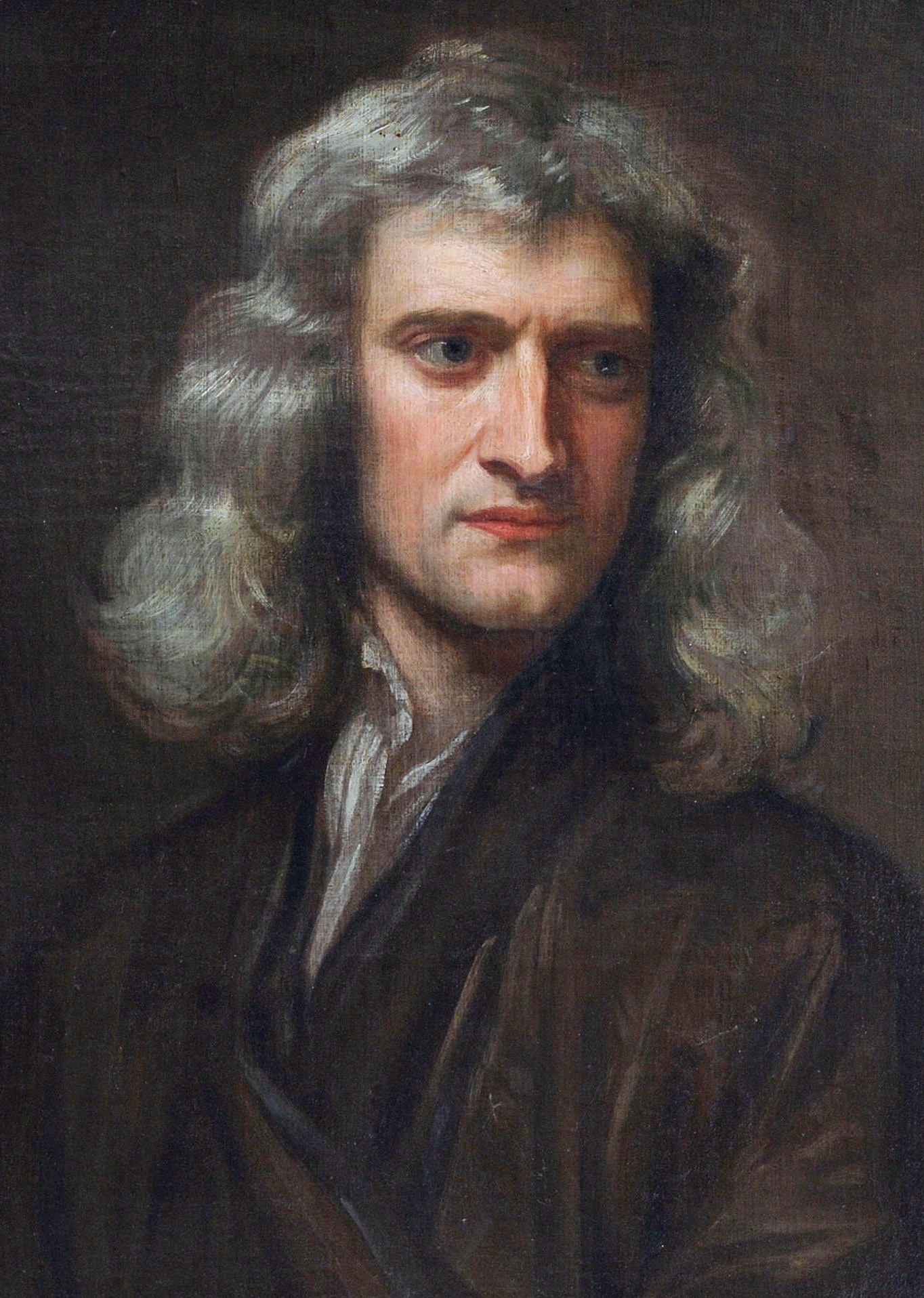
Life story
Sir Isaac Newton was born on 25 December 1642 in England, at the threshold of an era that would transform how humanity understood the workings of the universe. A mind of extraordinary range, he would become a mathematician, physicist, astronomer, theologian, author and inventor.
Newton stood as a key figure in the Scientific Revolution and in the Enlightenment that followed. In 1687 he published his Philosophiae Naturalis Principia Mathematica, a work that achieved the first great unification in physics and established classical mechanics, giving lasting order to the motions of the heavens and the earth.
Beyond mechanics, Newton made seminal contributions to optics and shares credit with Gottfried Wilhelm Leibniz for the formulation of infinitesimal calculus, a mathematics he had developed years before. He also contributed to and refined the scientific method itself, shaping the very manner in which knowledge is sought and tested.
Isaac Newton died on 31 March 1727 and was laid to rest in Westminster Abbey. His work is considered the most influential in bringing forth modern science, and the clarity he brought to the natural world endures as a foundation upon which later generations have continued to build.
Životopisné údaje z verejných zdrojov. Portrét: Wikimedia Commons (Public domain).
Constellation of Life
Important milestones that shaped their journey.