
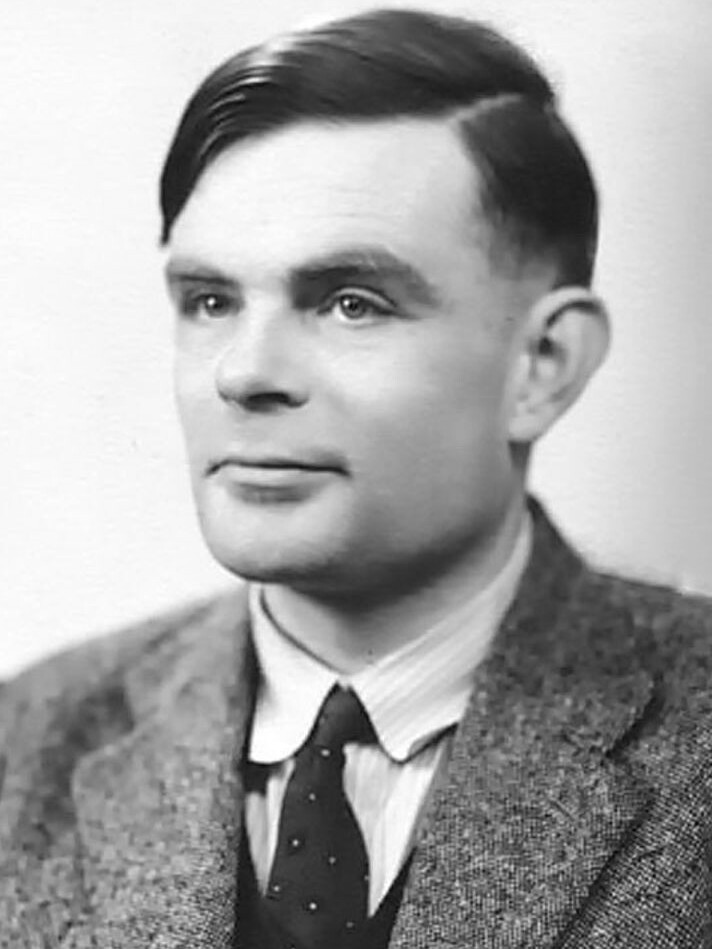
Life story
Alan Mathison Turing was born on 23 June 1912 in England. From an early age his mind turned toward logic and mathematics, and he would grow into one of the most original thinkers of the twentieth century.
He was an English mathematician, computer scientist, logician, cryptanalyst, philosopher and theoretical biologist. The breadth of his interests was matched by the depth of his insight, and he became highly influential in the development of theoretical computer science.
He provided a formalisation of the concepts of algorithm and computation with the Turing machine, which can be considered a model of a general-purpose computer. Through this work he laid down ideas that still underpin the machines and methods of the modern world.
Alan Turing died at Wilmslow on 7 June 1954. He is widely considered to be the father of theoretical computer science, and his legacy endures in every computer and every line of thought that traces its origins to his work.
Životopisné údaje z verejných zdrojov. Portrét: Wikimedia Commons (Public domain).
Constellation of Life
Important milestones that shaped their journey.